
Here’s How Much A £30K Earner Can Invest (Realistically)
If you enjoy this article, please checkout Brandon Talks Finance
Most people earning £30,000 a year convince themselves that after paying for daily life, there is nothing left over to invest. However, when you actually run the numbers, the math shows a different story.
I started investing at 22 while earning very little so I know how tough it can be, especially right now with the broader cost of living pressure across the UK. But today’s breakdown is about taking a £30k salary, looking at where that money is currently going, and establishing where it realistically should be going instead.
The 3 Traps Keeping People From Investing
Before diving into the numbers, it is essential to address why most people aren’t investing already. Non-investors typically fall into one of three common traps:
Trap #1: Waiting to earn more money first.
This is a widespread myth that usually boils down to lifestyle creep. When someone gets a pay rise or begins earning more, they rarely take that surplus and put it into investments. Instead, they upgrade their lifestyle by looking at newer cars, moving into larger homes, or booking an extra holiday every year. Before they realise it, the extra monthly cash flow has vanished entirely.
Trap #2: “I’ll fix my finances next month.”
Treating personal finance like a New Year’s resolution rarely works. People start with high motivation and excitement, but within two to three weeks, it becomes an afterthought. They keep kicking the can down the road, waiting for a “better time” that never arrives.
Trap #3: Social media comparisons.
This is by far the most dangerous trap. Humans are wired to compare themselves to others, and apps like Instagram show everyone on their absolute best days. You see people posting new luxury cars or trips to the Maldives, and you start feeling like you should be matching that lifestyle.
What isn’t visible behind the screen is the real financial situation: you don’t know if that holiday was put on a maxed-out credit card they cannot afford to pay off, or if that new car is tied to an expensive PCP finance contract. Comparison is the thief of joy, and constant highlight reels make it easy to forget that.
The universal fix to escaping these traps is simple: start small.
Want to watch the video format of this?
The Baseline Take-Home
For someone on a £30,000 salary in the UK, after standard deductions (income tax, National Insurance, Plan 2 student loan, and auto-enrolled workplace pension contributions), the net monthly take-home comes out to just over £2,000.
For clean numbers, we are going to use a flat £2,000 per month.
Monthly cash flow is split into three core categories plus dedicated savings.
Please do keep in mind that there is no one size fits all and this is based on UK average data. Someone living alone in London is going to look different to someone splitting bills with their partner in Sunderland!
Category 1: Essentials
- This covers non-negotiables: rent or mortgage payments, council tax, and core utility bills.
- While broad UK averages suggest 40%–60% goes to essentials, data specifically looking at the £30k salary band sits right around 45%–55%.
- Splitting down the middle at 50% (£1,000) provides a realistic, grounded baseline.
- Remaining balance: £1,000.
Category 2: The “Allow It” List
The “Allow It” category represents expenses that are not strictly essential to survive, but are completely reasonable recurring costs that support your daily life:
- Examples of Typical Monthly Expenses Include:
- Phone contract: £40
- Gym membership: £40
- Groceries: £200
- Streaming subscriptions: £25
- Car insurance: £70
- The target benchmark for this category is 15% to 20% of net income (roughly £300 to £400). Using an average of 17.5% (£350) gives a sensible allowance.
Category 2.5: Dedicated Cash Savings
It’s important to note that savings and investing serve two fundamentally different purposes and must remain separate:
- Cash Savings: Set aside for short-to-medium-term spending such as emergency funds, holidays, Christmas and birthday gifts, or unexpected car repairs.
- If you do not maintain a separate cash savings buffer, you will be forced to sell off long-term investments early to cover unexpected short-term costs.
- The average UK saver aims for 10% of monthly income. On a £2,000 take-home, that equals £200/month (£2,400/year) put directly into cash reserves.
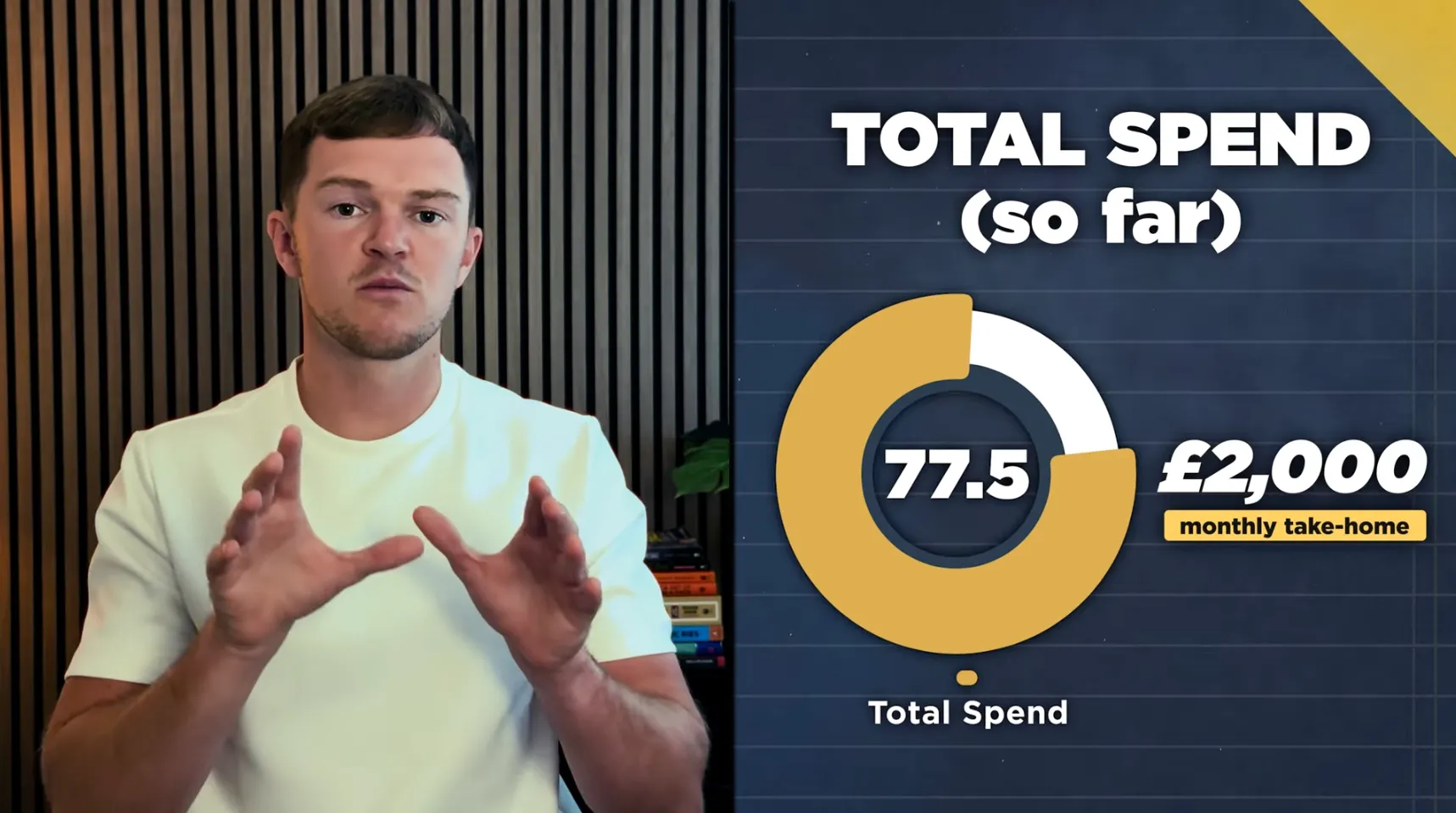
Running Total So Far:
- Essentials: £1,000 (50%)
- Allow It: £350 (17.5%)
- Savings: £200 (10%)
- Total Committed: £1,550 (77.5%)
- Remaining Pot: £450/month
Category 3: The “Red Category”
The remaining £450 is where most people let their money leak away without ever considering investing.
-
The Red Category: Dining out, takeaways, pubs and bars, retail spending, and luxury impulse purchases.
-
The goal is not to eliminate this category entirely. Life is meant to be enjoyed, and an unsustainable budget will fail. The solution is creating a defined, guilt-free budget.
-
Dave Ramsey advocates investing 15% (£300) of take-home pay, but during a cost-of-living crunch, that can feel restrictive.
-
Instead, cut that target in half to 7.5% (£150/month):
- Investing: £150 per month (7.5%)
- Red Category (Guilt-Free Spending): £300 per month (~£75 per week)
Allocating £75 every week for socialising and personal enjoyment offers a sustainable balance alongside investing.
The Compounding Math of £150 a Month
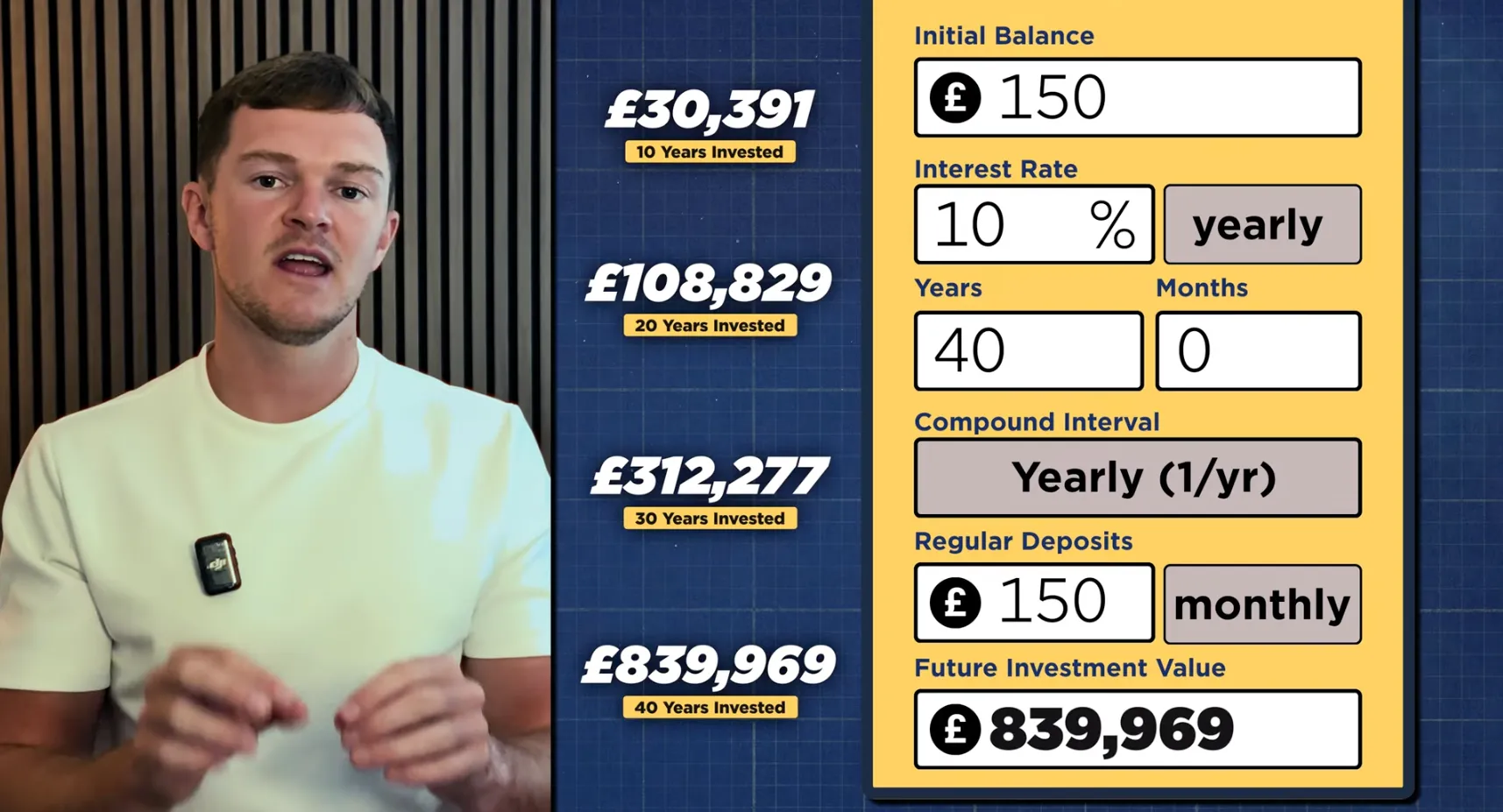
Assuming an average annual return of 10% (the historical unadjusted average of broad index funds like the S&P 500), investing £150 every month compounds to:
- 10 Years: ~£30,000
- 20 Years: ~£108,000 (clearing six figures)
- 30 Years: ~£312,000
- 40 Years: ~£839,000 (approaching seven figures)
This portfolio builds entirely on top of your workplace pension.
Building a six-figure pot from £150 a month provides long-term financial security.
The takeaway from this article is not about hitting an exact target or investing a fixed amount every month.
It is about establishing the habit of consistent investing.
Starting with £150 (or even less) overcomes the biggest obstacle: taking that first step.
If you want to get started today:
- Print your recent statements and highlight your spending categories to find where you are leaking money that could be invested.
- Set up an automated direct debit on payday to remove emotion and instantly put yourself ahead of roughly 90% of the population.
Hope you enjoyed, hope it was helpful and thanks for reading!
Brandon.
If you enjoy this article, please checkout Brandon Talks Finance