
What are the signs of an upcoming market crash?
“AI bubble”
“Circular finance”
“Valuations are off the charts”
“Bond markets are sending out warning signs”
“Global debt continues to rise”
Recent commentary can all sound very alarming, and you can be forgiven for thinking that the best course of action is to sell everything, buy gold, and hide it under the mattress.
How do you differentiate between genuine economic concern and the clickbait articles that regularly predict impending doom?
I’m sure I’m not the only one who has noticed an increase in doomerish headlines and thumbnails:

Meanwhile others are predicting that we are on the precipice of an economic boom.
I mean, Elon has never been wrong before has he?
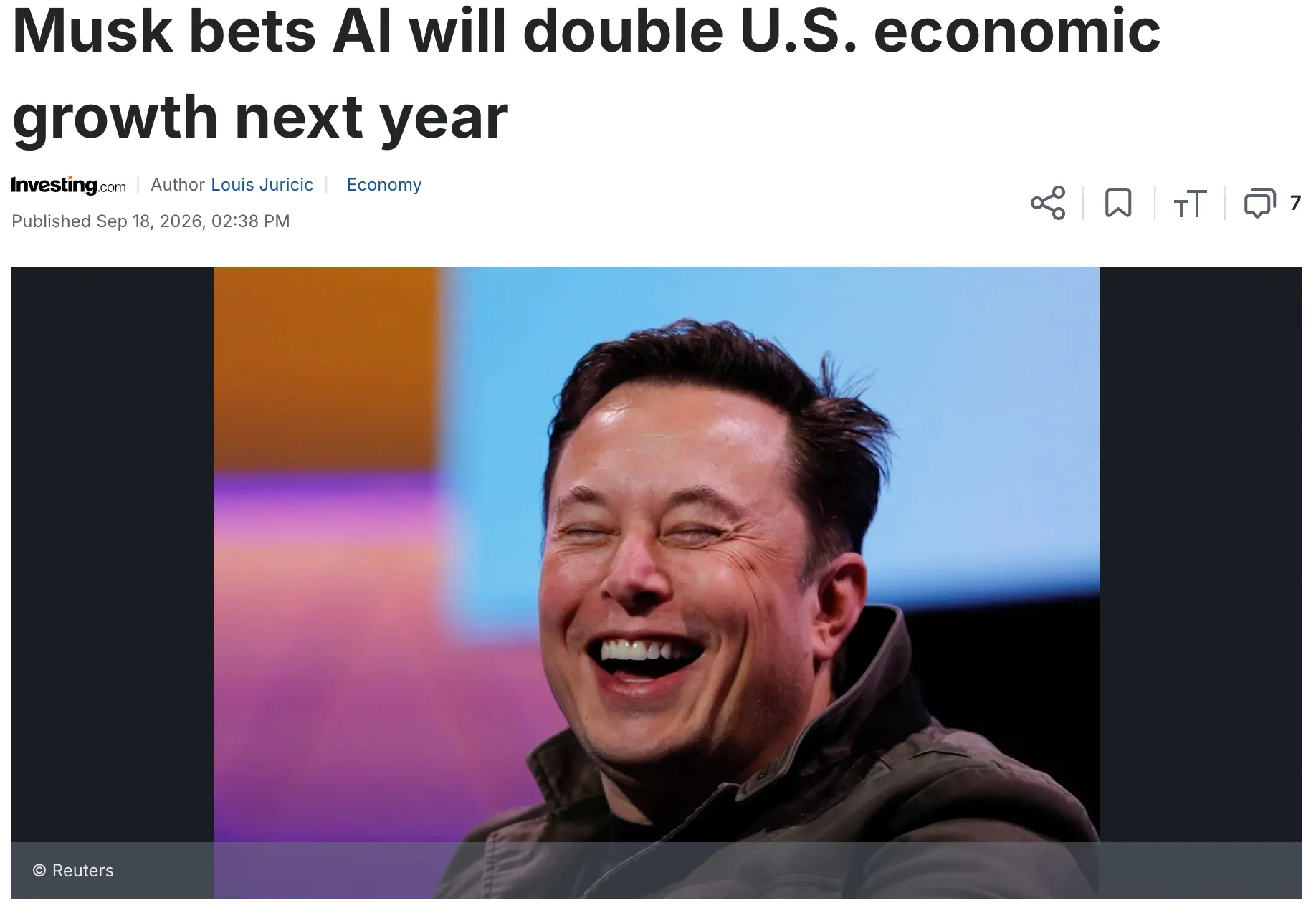
So who should we listen to, and who is full of s***t?
Some commentators take a more nuanced view and look at the signs and what has happened in the past:
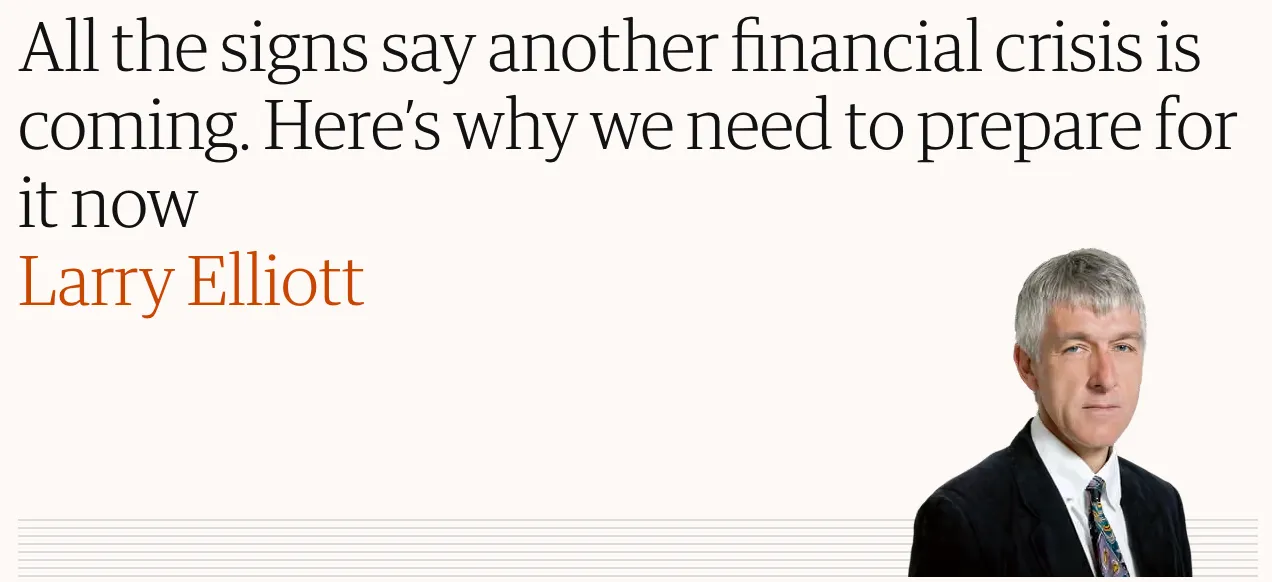
That is perhaps the best we can do, study previous crashes, see what the signs were and make comparisons to today where we can.
So below is a look at two previous market crashes, one that most people will have heard of, and one that many of you won’t be familiar with.
Both, however, have clear takeaways that are still very relevant in today’s world.
South Sea Bubble - 1720
No, this wasn’t a big bubble that formed in the middle of the sea.
The “South Seas” meant Spanish South America, and the South Sea Company was set up in 1711. A major line of business for them was the slave trade – so please note already that morality wasn’t a top concern at the company.
They struck a deal with the British government to take over part of their debts (the British were in the middle of a major tear up with the French and Spanish). In return for this, the South Sea Company was given a monopoly on trade with Spanish South America. The thinking was that the war was coming to an end, and as soon as it finished business would be booming.
Now this next bit is somewhat fiddly, but it is the key to the whole saga:
The South Sea Company was allowed to swap the national debt for its own stock. For example, if the British government owed you £100, the South Sea Company was allowed to give you £100 of its own stock instead.
This meant that the higher the share price of the South Sea Company, the fewer stocks it would need to give out.
Think of it this way: if its stock was £10 a share, they would have to give someone 10 shares in a swap for £100 of government debt. However, if they managed to inflate the stock price to £50 a share, they would only need to give that person 2 shares for the same amount of debt. That way the company can now sell the other 8 shares.
So inflating the stock was exactly what they did! They lent investors money to buy shares, allowed people to pay in instalments, gave shares to prominent politicians and even the King.
From January to the summer, shares went from £128 to £1000.
Every man and his dog wanted in on the action, famously this included Isaac Newton. The problem however, was that the South Sea Company wasn’t making much money, the actual amount of trade going on in the South Sea after the war was tiny.
That meant that the value of the stock depended almost entirely on the share price continuing to rise, rather than any fundamentals. This meant that any hesitation from investors could be catastrophic, and it was…….
The bubble burst
Many buyers hadn’t actually fully paid for their stocks. They had paid deposits up front and had future instalment obligations. When these instalments came, the only option a lot of investors had was to sell.
At the same time, a number of copycat schemes in Britain collapsed, as well as a similar scheme in France (the Mississippi scheme). Foreign investors started to take money out of London.
Directors at the company started to quietly sell their shares.
The company’s own bank - The Sword Blade Company collapsed, becoming the final nail in the coffin for the company. Shares fell by around 80% in a few months and many people lost huge sums of money. Poor Isaac Newton ended up down around £20,000.

An inquiry that followed discovered widespread bribery where government ministers had been given shares in order to support the company. The British Chancellor - John Aislabie (for you non Brits, this is the finance minister) was expelled from parliament and sent to the Tower of London.
Borrowed money was both what inflated the bubble and what made it burst so violently.
2008 Financial Crisis
Let’s jump forward a few centuries and look at the big daddy of recent market crashes.
Now multiple books and even a few decent films have covered this event so I’ll try to keep it brief, as it will no doubt be much more familiar to you than the previous crash.

Following the dot-com crash of the early 2000s, interest rates were extremely low which led to house prices rising much faster than income.
Lenders loosened their standards leading to “subprime” mortgage loans to people with poor credit. In the UK, Northern Rock’s “Together” mortgage allowed people to borrow up to 125% of a home’s value.
Banks bundled these mortgages into complex investments, many of which were rated AAA. Banks funded themselves with short-term borrowing and very thin cushions of their own money.
The whole thing was running on an assumption that house prices would keep on rising. It didn’t matter if you could afford the home or not if the price was going to rise 20% in a few years. You could just sell it, pay back the loan, and pocket the difference.
The Fed raised rates from 1% (2004) to 5.25% (2006). Borrowers began to default. Nobody knew who held the bad debt, so banks stopped lending to each other.
Lehman Brothers went kaput whilst holding $639 billion in assets.
Many of you will remember the pain that followed in the years after.
So what common threads can we pull from these two crashes?
General themes to watch out for
- A rush of new and low quality companies
- Debt and margin loans - look for low quality debt
- Easy money, that was often borrowed (leverage).
- Extreme behaviours - spikes in retail trading and a sense that you can’t lose.
- Insiders quietly cashing out. They think things are at their peak, and have an insight on the future of the company.
So when faced by cries of “we are in an AI bubble”, how should we think?
Caution against the doomsters
History is clear that these signs don’t give you a date
After Alan Greenspan warned of “irrational exuberance” in December 1996, the Nasdaq more than tripled before it peaked in March 2000. The dot-com bubble burst shortly after that, but 4 years after Greenspan’s warning. There isn’t a set time on when these crashes happen.
There are real differences today from previous crashes
Today’s biggest AI companies and hyperscalers make enormous profits, and the core banks are far stronger than in 2008. This shouldn’t mean that everything is hunky dory, but you can’t map one situation neatly onto another one.
What turns a fall into a disaster is debt in the wrong place
If you take one thing away from this article it’s this.
Think of the borrowed money in the South Sea Bubble, and mortgages in 2008. The most useful indicators to watch today are in the credit markets (private credit, borrowing to fund AI, government bond yields), not just stock prices.
What history suggests ordinary investors do
You don’t need to predict the crash. You need to be able to sit through one.
The people hurt most in every episode were forced sellers, especially those who had borrowed, or who needed the money at the wrong moment.
Falls are normal - so plan for them
Since 1980 the S&P 500 has dropped an average of 14.2% from peak to trough at some point in the year, in 35 out of 46 years it bounced back.
Only invest for the long term
Money you’ll need within about five years doesn’t belong in the stock market.
Disclaimer: I am not a financial advisor. This article is for informational and entertainment purposes only and does not constitute financial advice.